Swedish Massage in O’Fallon
Are you searching for a Swedish massage in O’Fallon? Is your goal to receive peace and ease or experience pain relief? Either way, make your day great by scheduling a relaxation or deep tissue massage at Jennifer Brand Spa.
| 90-minute Massage | $180 | Book Now |
| 60-minute Massage | $120 | Book Now |
| 90-minute Massage | $180 | Book Now |
| 60-minute Massage | $120 | Book Now |
What is Swedish Massage
A significant portion of the information in this article was drawn from the exhaustive research of Pia Lundquist Wanneberg [1]. Her in-depth exploration of the history of gymnastics, physiotherapy, and massage provided the foundation that made this work possible.
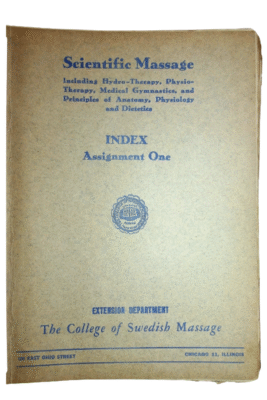
The modern definition of Swedish massage is widely accepted as the application of light to medium pressure with the intention of promoting rest and relaxation. Today’s definition of Swedish massage is not what the founders of our industry intended. According to one of the first and most prominent Swedish massage schools of the 20th century [2],
- The Swedish is the most scientific. It is vigorous and bracing. It exercises the muscles to the bone, and is supposed to give the same benefit at each treatment as would a walk of several miles, yet without producing fatigue – a point of great importance, especially in connection with diseases of the heart.
- The German treatment is really a modification of the Swedish system, some of the exercises being omitted and baths given in place of them.
- The French system merely a delicate manipulation, chiefly used by French ladies in beauty culture, to keep the skin free from wrinkles and blemishes. It is confined to the face, neck, and arms and is not of any special value in disease.
Johan Arvedson (1862 – 1937), the first person to use the term “Swedish massage” in print (1913), described it as “the handling of the soft tissues by movable pressure in the form of stroking, rubbing, pinching or kneading, as well as striking and beating performed with a therapeutic aim.” It is essential to note that Arvedson was a medical gymnast, so it is unlikely that he was solely using light to medium pressure to encourage a state of peace throughout his sessions.
What is a gymnast? When reading the term with our modern eyes, we imagine a lithe, strong athlete training on bars, rings, and beams. However, during the 1800s, it was a profession that helped train young men to be physically fit and ready for war. Over time, the definition evolved—people who exercised in gyms became known as gymnasts. In 1896, the new definition was galvanized when it was included as an official event at the first modern Olympics. By the mid-1900s, medical gymnastics was replaced by the practice of physiotherapy.
Scientific Massage
Although publicly known as Swedish massage, it was taught as scientific massage. Its framework was built from Georg Mezger’s codification of the classic massage techniques, traditional massage, medical gymnastics, physiotherapy, hydrotherapy, hygiene standards, dietetics, and a modern understanding of anatomy and physiology.
The term Swedish massage was used as a professional banner to help improve the public’s perception of massage. It also served as a branding and legitimizing label to increase professional visibility. Ultimately, it served as a cultural reference point to help the public identify a standard massage.
History of Swedish Massage
The first person to officially print the term Swedish Massage was Johan Arvedson in 1913. He was a medical gymnast who argued that massage and gymnastics should be separate fields. While manual therapy was always an element of Ling’s gymnastics to some degree, it was never a major component. Over time, especially after Mezger codified the classic techniques, gymnasts began to experience disciplinary divergence. As Ling’s exercise-centered gymnastics reached a plateau and stopped innovating, the biomedical field was rising into dominance. Perhaps the massage-focused gymnastics could see the writing on the wall and wanted to separate from gymnastics before the doctor-led medical system absorbed their field.
Is this origin of Swedish massage in the United States? Probably not. The term may have influenced its development to some degree, but given the prominence of the movement cure, and the usage of massage in that therapy, Swedish massage is likely a logical evolution of terminology rather than an invented term.
The foundations of modern Swedish massage may have emerged from the works of the Society of Trained Masseuses (STM). In 1884, the STM was founded after acts of impropriety in association with massage was published in the British Medical Journal. As a response the Society of Trained Masseuse created a system for legitimate massage using the biomedical model of physical rehabilitation, defined curricula, examinations and surveillance of members [3].
At the turn of the century, practitioners of massage were attempting to legitimize, and distinguish themselves from illicit operators. The Swedish label had a positive and wellness focused reputation, which may have been a reason the name was adopted into massage.
Modern Era of Swedish Massage
The public’s perception of Swedish massage dramatically changed in the early 2000’s due to the rise of the massage franchises. The franchises used their marketing power to further expand public awareness and acceptance of massage through the moniker of Swedish massage. In doing so, they diluted the quality of massage, reducing it to a binary system of Swedish and Deep.
- Swedish meant light, relaxing massage for stress relief.
- Deep meant firm pressure to relieve pain.
Who is the Father of Massage?
Most massage therapists know who Per Henrik Ling is. However, when you ask them what his importance was, they’d tell you he was the creator or father of Swedish massage. Is Per Henrik Ling the creator of Swedish massage? No, he is not. Per Henrik Ling lived from 1776 – 1839, the first usage of the phrase Swedish massage was made by Johan Arvedson in 1913. P.H. Ling is the father of Medical Gymnastics, and while Ling gymnastics may have included manual manipulation, it was closer to physiotherapy than massage.
Sometimes Johan Mezger is named the father of Swedish massage. This is also inaccurate. Mezger lived from 1838 – 1909, and he never used the phrase Swedish massage. Nor was he a practitioner of medical gymnastics, or massage, instead he was a Dutch physician. His medical studies focused on mechanotherapy, a combination of orthopedics, and rehabilitation. Though influenced by Ling’s movements, he was not a gymnast. Instead he borrowed, refined, and systemized the passive manipulations and renamed them with French terms: effleurage, petrissage, friction, tapotement, and vibration. Mezger should be known as the father of defined manual techniques, but that term isn’t as catchy.
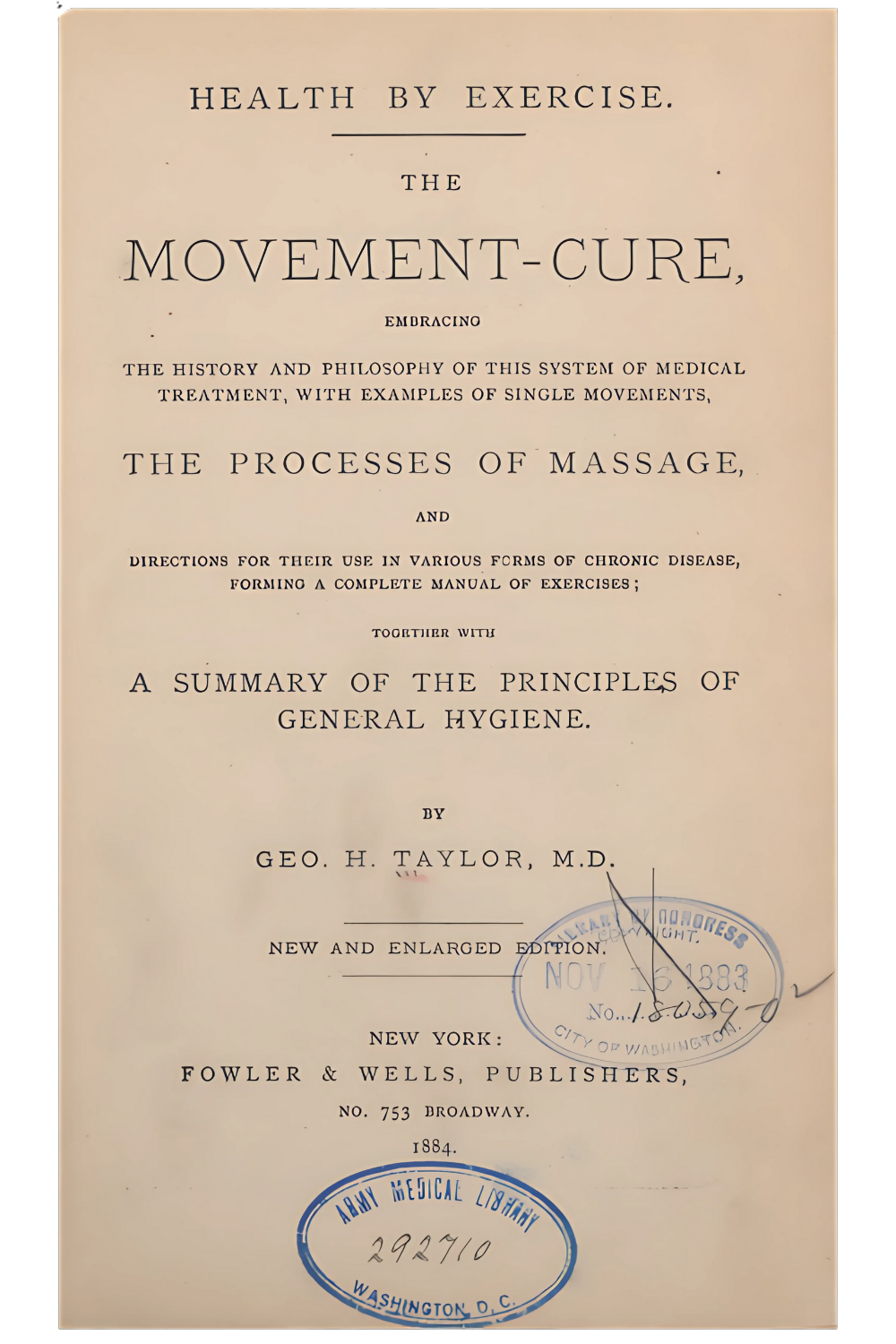
Sometimes people claim George Herbert Taylor and Charles Fayette Taylor brought Swedish massage to the United States. This is also inaccurate. They were gymnasts, not massage therapists. They used terms like Swedish Movement-cure, or medical gymnastics, never Swedish massage. When describing the Movement Cure they used manipulations and movements, not massage techniques, in their literature.
Who is the father of Swedish massage? If we base it on the first official usage of Swedish massage in print, it is Johan Arvedson.
History of Medical Gymnastics
It is important to note that prior to 1913 Swedish massage did not exist in a formal capacity. While medical gymnastics sometimes used massage in its treatments, it was a minor element of the practice. For this reason Per Henrik Ling’s legacy is of medical gymnastics, not Swedish massage.
Per Henrik Ling created medical gymnastics, a therapeutic exercise system, which included some massage-like manipulations. Later, Georg Mezger codified the movements of medical gymnastics into a set of standardized techniques using French terminology. Then Johan Arvedson used the term Swedish massage in print, creating a new massage modality. People often conflate these histories and assume Ling, or Mezger are the originators of Swedish massage. In reality, Swedish massage branched out of medical gymnastics, but medical gymnastics was not Swedish massage.
Gymnastics
In the early 1800’s europeans became heavily invested in physical activity which led to the development of Ling gymnastics (medical gymnastics), German Turnen, and English sport. This was due to a number of culminating factors such as the rise of Enlightenment Philosophy, war, and the philanthropic education movement.
- Enlightenment Philosophy advocated for individual freedoms, freethinking, and faith in reason and scientific progress, while valuing the importance of romanticism, emotion and nature.
- The French Revolution and Napoleonic Wars increased public and state interest because it promoted physical fitness, national unity, and civic virtue. It encouraged citizens to be fit and healthy, which prepared them for military service, bolstering military preparedness.
- Schools of philanthropy were special institutions that taught a humane education should include a focus on the body and mind. Physical exercise was a combination of aristocratic and bourgeois activities. Aristocratic included fencing, horseback riding, and dance. While bourgeois involved popular sporting activities like running, skating, and hiking.
Per Henrik Ling
Per Henrik Ling (1776 – 1839) founded the Royal Central Gymnastics Institute in 1813, now known as the Swedish School of Sport and Health Sciences. His goal was to help people exercise in as many balanced and holistically harmonious ways possible. Helping people achieve excellent health from surface to center, organs to their soul. Like the Greek philosopher-physicians, Ling believed everything was interconnected, and that harmony led to good health.
He divided his gymnastics into four elements: educational, military, medical, and aesthetic. Perhaps he chose four elements to mirror the Pythagorean philosophy, like Hippocrates?
- Education: The purpose was to integrate physical training with mental and moral development. It fostered discipline, health, and character through structured exercises that promoted the values of Enlightenment philosophy.
- Military: Due to the era’s emphasis on military preparedness, this element focused on improving the strength, agility, endurance, coordination, and discipline of soldiers.
- Medical: This element’s purpose was to help cure and treat illness and physical suffering.
- Aesthetic: This element was to help people perform expressive movements to convey feelings and emotions. It combined exercise with physical expression to encourage grace, harmony, and natural flow. The Aesthetic element was the least impactful of all four.
Ling Gymnastics
Ling’s approach to the diagnosis and treatment of illness was incredibly similar to the four humors. However, instead of seeking harmony between the fluids of blood, phlegm, yellow bile and black bile, he used the three forms. The three forms were mechanical, chemical, and dynamic. He believed health was achieved when the three were in balance, and none were absent.
- Mechanical: Represented by our strength.
- Chemical: Represented by the food we eat the medicines we consume.
- Dynamic: Represented by our spiritual and mental aspects.
Per Henrik Ling believed that the best way to treat illness was through exercise and cultural recreation, instead of prescribing medicine. Other treatments included circulation techniques and passive stretching, with manual manipulation which may include beating, kneading, pounding and pressure. While he was not against medicine he believed it was over prescribed.
Ling’s Medical Gymnastic Legacy
Ling had several successors, including Lars Gabriel Branting, Tuls Johan Hartelius, Anders Wide, and Johan Arvedson.
Lars Gabriel Branting
Lars Gabriel Branting was the first successors of Per Henrik Ling and was known as a marketing genius, especially in regard to the development, reputation, and growth of medical gymnastics.
- He convinced the medical academy and the Swedish nobility to classify medical gymnastics as a medical science that could cure most illnesses.
- He earn medical gymnastics international recognition, and was responsible for its geographic spread and reputation.
- He systemized Lings teachings, quite the feat since Ling left behind very little written material.
- He improved upon Ling’s work with and kept meticulous handwritten records about his patients.
Tuls Johan Hartelius
Tuls Johan Hartelius (1818 – 1896) was appointed head teacher in 1864, and remained until 1887. He compiled, systemized and clarified Branting’s handwritten and disorganized notes, then published them in the Lärobokisjukgymnastik in 1870. Also known as the Swedish Movements or Medical Gymnastics, this book became the basis for future textbooks in the field.
It appears that Hartelius broke away from Ling’s view of health and illness. Rather than treating sickness through the lens akin to the Pythagorean philosophy of the three forms, he adopted current scientific theories. Believing people were neither ill or healthy, instead a combination of the two, sickness was simply germinating within healthy cells until they became dysfunction. His approach was to encourage the cells to remain healthy through movement, which were categorized by their effect: strengthening, invigorating, calming, sleep-inducing, draining, or evacuating.
Anders Wide
Anders Wide (1854 – 1938) compiled and further-systemized and clarified medical gymnastics.
Johan Arvedson
Johan Arvedson (1862 – 1936) established an affiliate school of the Royal Central Gymnastics Institute in 1887 that taught medical gymnastics and massage. He argued that massage was a distinct practice from medical gymnastics because toward the of the 19th century gymnastics was consisted of active movements performed by the patient, and passive movements performed by the gymnast. While massage entailed only passive movements, primarily in the form of manual therapy. In his medical texts he distinguished the difference between Swedish Massage and Medical Gymnastics.
- Swedish Massage was defined as “a handling of the soft tissues by movable pressure in the form of stroking, rubbing, pinching or kneading, as well as striking and beating performed with a therapeutic aim.” Comprised of the four main strokes: effleurage, friction, petrissage, and tapotement.
- Medical Gymnastics was defined as “the treatment of a patient while exercising musculoskeletal organs.” Comprised movements and positions.
The Four Main Strokes According to Arvedson
- Effleurage involved strokes directed toward the heart, with the intention to improve circulation help with lymph flow. There were two kinds of Effleurage strokes. The first type started light, and quickly moved along a line of 15 – 25 cm. The second, was performed slowly with more pressure. Averdson stated the second type was used for swelling and edema, or could be used to lessen tension pain, reduce inflammation, improve metabolism, or rejuvenate fatigued muscles.
- Friction was meant to break down pleural thickenings and inflammatory products and was performed with firm pressure. The gymnasts was taught to remain aware of the patient’s reaction to monitor their discomfort.
- Petrissage has a similar purpose as friction in it was designed to break down pleural thickenings and inflammatory products. This stroke tended to cause pain as it entailed pinching and kneading.
- Tapotement included techniques similar to striking and prodding, and included hacking, beating, pounding, shaking and vibration.
George Herbert Taylor and Charles Fayette Taylor
Charles Fayette Taylor (1829 – 1899) was taught by Mathias Roth (the first person to publish a textbook in English on the Ling system). Charles Taylor who was from New York introduced Medical Gymnastics to the United States in 1858 with his brother George Herbert Taylor (1821 – 1896). G. Taylor wrote the first American book on the Ling system, Exposition of the Swedish Movements.
Movement Cure Books
Health by Exercise, by George Herbert Taylor,
by George Herbert Taylor – 1884
Massage: principles and practice of medial treatment,
by George Herbert Taylor – 1887
A sketch of the movement cure, with illustrative cases,
by George Herbert Taylor – 1860
Principles and practice of hygeio-medical science,
by George Herbert Taylor – 1857
The movement cure in every chronic disease,
by George Herbert Taylor – 1861
An illustrated sketch of the movement-cure,
by George Herbert Taylor – 1868
Paralysis, and other affections of the nerves,
by George Herbert Taylor – 1880
Mechanical aids in the treatment of chronic forms of disease,
by George Herbert Taylor – 1893
Medical Gymnastics
Per Henrik Ling was an instructor of gymnastics. He developed a wellness system called medical gymnastics to help people achieve peak physical performance using a combination exercise and massage. His methods were inspired by the Greek philosopher-physicians of antiquity. These methods were widely adopted throughout the world, but was opposed by physiotherapists, physicians, orthopaedists, and the Karolinska Institutet (the organization responsible for awarding the Nobel Prize in Physiology and Medicine).
The Karolinska Institutet and other physicians argued medical gymnastics was not grounded in scientific evidence, and should be operating under the supervision of the medical community. During this criticism the Royal Central Gymnastics Institute (the headquarters of Ling gymnastics) argued physiotherapists were practicing medical gymnastics without being properly trained or certified.
Humility is essential in any field. When we believe we have reached the top of the mountain there is only one way to go. Once the medical gymnastics became an influential force within the wellness community the gymnasts began to believe their method was superior to all other forms of exercise. In their view, it was perfect and didn’t require further development. This led it to stagnate.
In addition to internal stagnation, medical gymnastics was facing the rise of modern medicine. The biomedical approach was taking the world by storm, and the Karolinska Institutet was a key player in its development. Medical gymnastics could not compete with the scientific advancements of vaccines, surgical treatments, hospitals, medical training, specialization, and medical research. Sweden followed the Western push to adopt the biomedical system, gradually replacing traditional medicine in the 19th century.
Eventually the feud between medical gymnastics and the medical system culminated in the Royal Central Gymnastics Institute being absorbed by the Karolinska Institutet in 1934. Medical gymnasts became known as physiotherapists, and were placed under the supervision of physicians. Over time, the esteem associated with being a physiotherapist degraded as they lost their autonomy and became dependent on the medical community.
Sources and Notes
- Lundquist Wanneberg, P. (2018). Gymnastics as a remedy: A study of nineteenth-century Swedish medical gymnastics. Athens Journal of Sports, 5(1), 33–52. https://doi.org/10.30958/ajspo.5.1.2 – Full text: https://www.athensjournals.gr/sports/2017-1-X-Y-Wanneberg.pdf – Full text: https://www.athensjournals.gr/sports/2017-1-X-Y-Wanneberg.pdf
- The College of Swedish Massage. (1939). Home-study course in massage and hydro-therapy. Chicago, IL: The College of Swedish Massage.
- Nicholls, D. A., & Cheek, J. (2006). Physiotherapy and the shadow of prostitution: The Society of Trained Masseuses and the massage scandals of 1894. Social Science & Medicine, 62(9), 2336–2348. https://doi.org/10.1016/j.socscimed.2005.09.010
- https://www.britannica.com/biography/Friedrich-Ludwig-Jahn
- https://www.degruyterbrill.com/document/doi/10.7556/jaoa.2005.105.10.457/
- https://pmc.ncbi.nlm.nih.gov/articles/PMC2565620/
- https://www.umb.edu.pl/photo/pliki/progress-file/phs/phs_2011_2/208-216.pdf
- https://history.physio/massage-and-the-history-of-physiotherapy
- https://pmc.ncbi.nlm.nih.gov/articles/PMC2565611/
Swedish Massage Near Me In O’Fallon MO
You can find Jennifer Brand Spa at 2717 Hwy K, O’Fallon, MO 63368, right next door to Avis and El Maguey.